Brazil's World Cup Winning Jerseys: 1958 to 2002
The canarinha yellow is more than a color. It is a national identity, a symbol that transcends football and unites two hundred million people under a single flag. Since Brazil adopted its iconic kit in 1954 — after losing the 1950 final wearing white, which they abandoned forever — yellow became synonymous with samba, magic, and World Cup victories.
Brazil is the only nation to have lifted the World Cup five times. Behind each star embroidered on the chest of their shirt lies a story of design, different kit manufacturers, and generations of players who shared the same dream. This article traces those five champion jerseys, from the modest beginnings of Sweden 1958 to the global dominance of Korea-Japan 2002, and previews what could be the kit of the sixth star at the 2026 World Cup.
Brazil 1958 Jersey — The First Star in Sweden
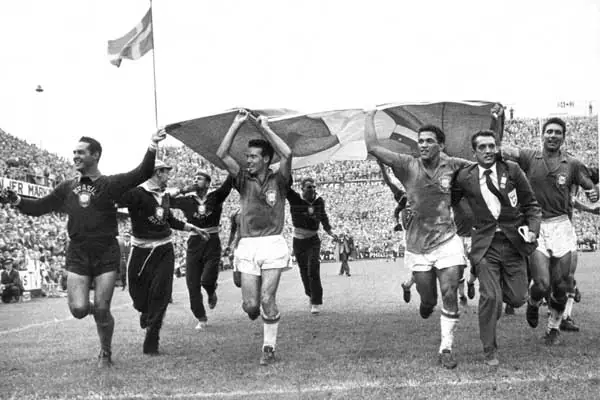
Brazil’s first World Cup-winning kit was made by Topper, a Brazilian brand that dressed the Canarinha for more than three decades. The 1958 design was straightforward: a round neck, short sleeves, plain yellow with small green details on the collar and cuffs. On the back, a simple numbering system that gave no hint of the history about to be written.
On June 29, 1958, at Råsunda Stadium in Stockholm, a 17-year-old named Edson Arantes do Nascimento — Pelé — scored two goals in the final against Sweden and wept on the pitch. Wearing that yellow shirt, he launched the legend of the most decorated national team on the planet. Brazil won 5-2, and the world met the man who would be considered the greatest footballer of all time.
Brazil 1962 Jersey — Back-to-Back Champions in Chile
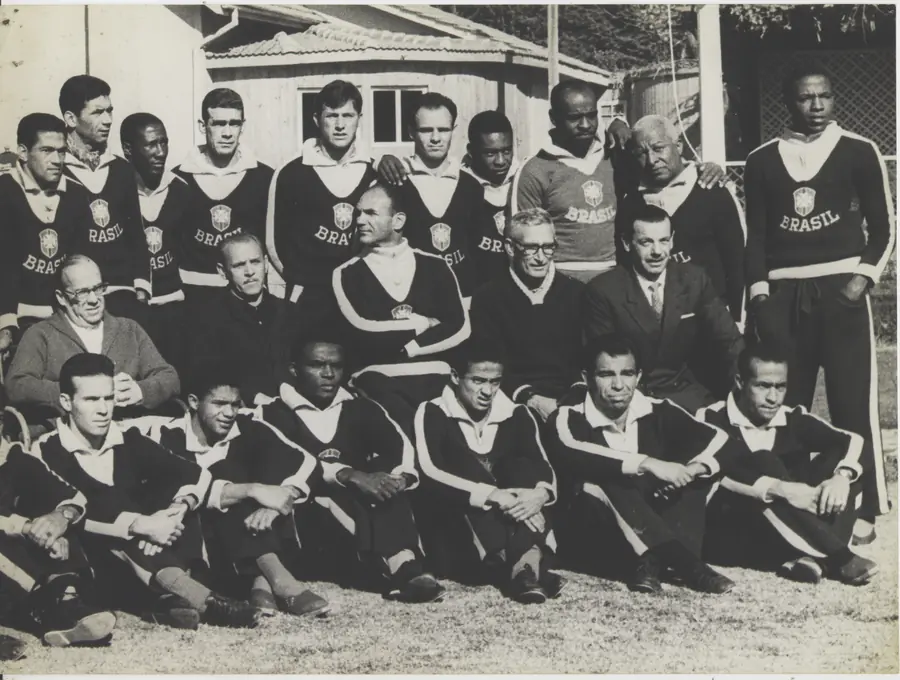
Four years later, the kit design had barely changed. Topper kept the 1958 jersey virtually identical: same yellow, same cut, same restraint. A visual continuity that mirrored the stability of a sporting project that knew exactly what it was doing.
The 1962 World Cup in Chile was defined by Pelé’s injury in the second match, which kept him on the sidelines for the rest of the tournament. But the team had another magician: Garrincha, the bandy-legged dribbler with the impossible skill. It was Garrincha who carried Brazil to the final, where they defeated Czechoslovakia 3-1. Two stars. Two consecutive World Cups. A kit almost unchanged that was already building its own legend.
Brazil 1970 Jersey — The Most Iconic Kit in History
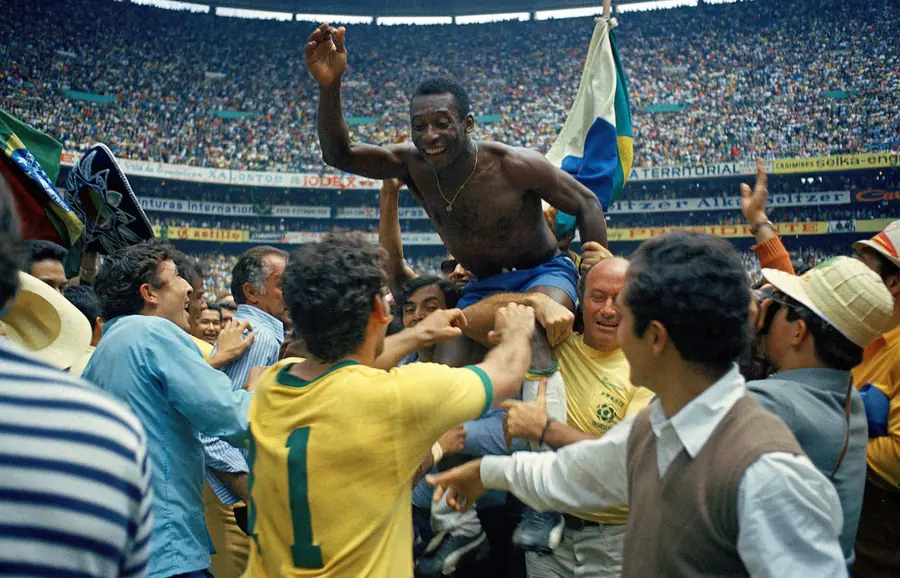
If there is one jersey that defines the canarinha archetype, it is the one worn at Mexico 1970. The design Topper produced that year cemented Brazil’s visual identity forever: vivid yellow as the base, green collar, and a blue stripe running along the inside of the sleeves. White shorts with a blue side stripe completed the most recognisable kit in world football.
The team that wore it is widely regarded as the greatest in history. Pelé at his peak, Rivelino with his thunderous left foot, Jairzinho scoring in every single match, Tostão orchestrating from midfield. Brazil swept aside every opponent and beat Italy 4-1 in the final in front of more than a hundred thousand fans at the Estadio Azteca.
The victory also carried extra symbolic weight: by winning their third World Cup, Brazil earned permanent possession of the Jules Rimet Trophy — the original gold and lapis lazuli prize commissioned in 1930. An irreplaceable piece of football history.
Brazil 1994 Jersey — Back on Top After 24 Years
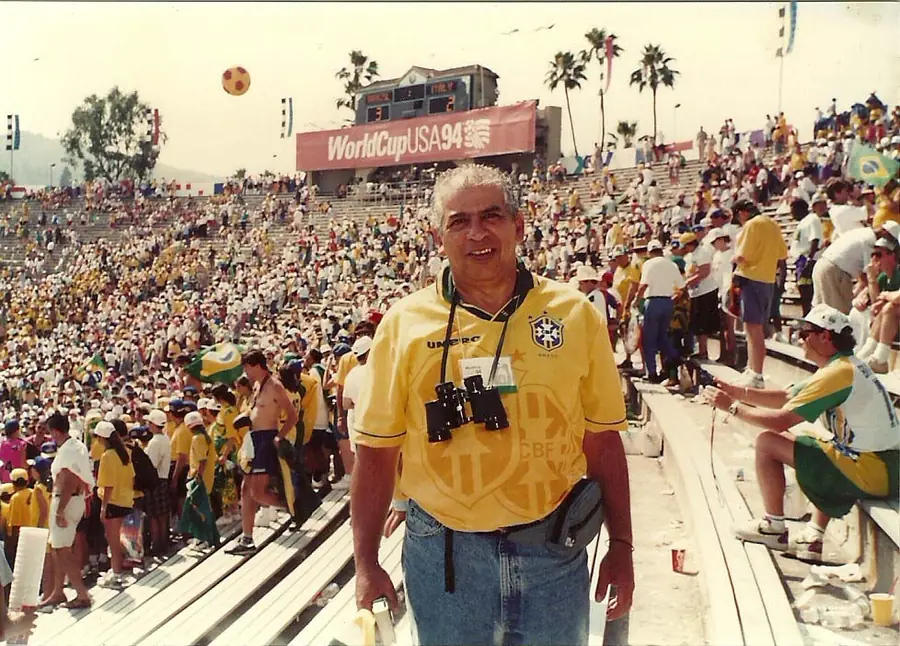
Twenty-four years without a World Cup title. For a team accustomed to winning, that gap was an eternity. When Brazil arrived in the United States for the 1994 World Cup, they did so with a redesigned kit and a new manufacturer: Umbro, the English brand that had taken over from Topper as football moved into the modern era.
The design was the most sophisticated to date: lighter synthetic fabric, a closer body fit, and graphic details on the collar and shoulders that broke with the austerity of previous decades. Brazil was still yellow, but now with a construction that anticipated the football of the twenty-first century.
Inside that shirt, Romário and Bebeto formed the tournament’s most lethal striking partnership. Their goal celebration — rocking an imaginary baby, in tribute to Bebeto’s newborn son — became one of the most memorable moments in World Cup history. Brazil won the final on penalties against Italy, and the 24-year wait ended at the Rose Bowl in Pasadena.
Brazil 2002 Jersey — The Five-Time Champions with Nike
By the time the 2002 World Cup in Korea and Japan arrived, Brazil had been wearing Nike for several years — the American brand having secured the kit deal since 1996. The 2002 jersey featured first-generation Dri-FIT technology: breathable technical fabric, a close-cut fit, and an almost fluorescent yellow that became the defining image of an era.
The victory in that tournament was extraordinary for several reasons. Ronaldo, the Phenomenon, returned four years after the inexplicable episode of the France 1998 final — when he suffered a convulsion on the day of the match — to score twice against Germany. It was the most cinematic redemption in the history of football.
With that triumph, five stars were permanently embroidered above the badge on Brazil’s shirt. A record no other nation has matched. Brazil, five-time world champions.
Brazil 2026 Jersey — The Sixth Star?
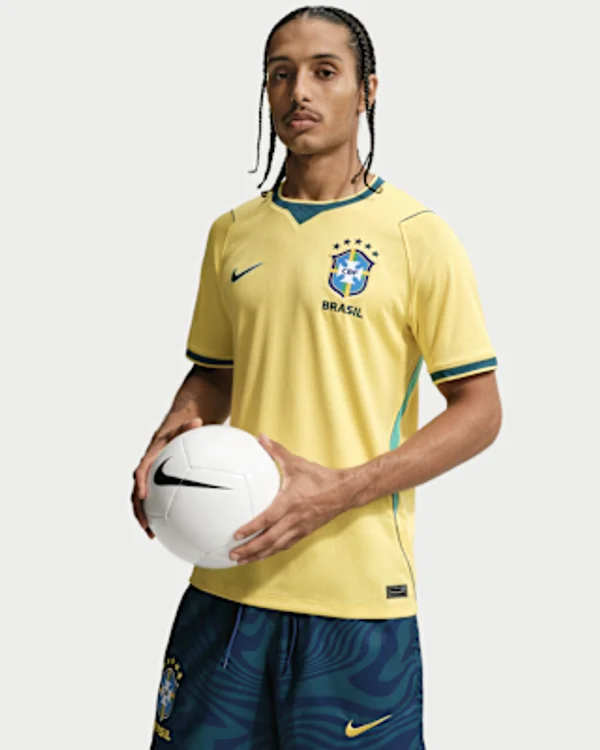
From the fifth star to the dream of the sixth. For the 2026 World Cup, to be hosted by the United States, Mexico, and Canada, Nike has created a kit that honours tradition while embracing cutting-edge technology. The Dri-FIT ADV — Nike’s highest-performance fabric — promises maximum moisture management and freedom of movement for the players.
The design brings back the vibrant yellow of always, with green details on the collar and shoulders that echo the classic jerseys of years past. It is a shirt made both for the fans who will wear it in the stands and for the players looking to write the next chapter of history.
Want to see prices and available versions of the Brazil 2026 jersey? Check our full guide with all buying options on our Brazil jersey page.
Continue
